

Paperboard boxes, as an important form of premium modern packaging, are widely used in electronics, cosmetics, food gift sets, and luxury goods due to their stable structure, refined appearance, and excellent processing performance. Based on structural design, opening methods, and functional purposes, paperboard boxes can be categorized into several types to meet diverse packaging requirements.
From a structural perspective, common paperboard box types include lid-and-base boxes, drawer boxes, flip-top boxes, and book-style boxes. Lid-and-base boxes consist of a separate lid and base, offering a simple and stable structure suitable for most gift packaging applications. Drawer boxes feature an inner tray and an outer sleeve, providing a sliding opening mechanism that enhances user interaction and is often used for high-end cosmetics and electronics packaging. Flip-top boxes are connected with a hinge, allowing easy opening while maintaining structural integrity, making them common in gift and luxury packaging. Book-style boxes resemble a book in appearance and are typically opened with magnetic closures or inserts, offering strong display value and collectible appeal.
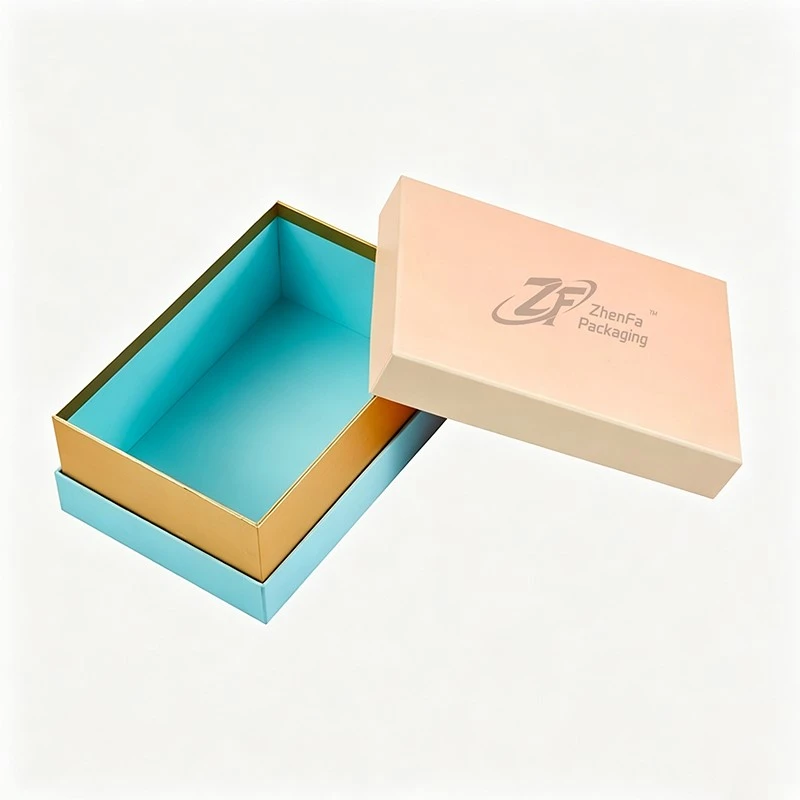
In terms of functionality, paperboard boxes can be divided into display packaging and protective packaging. Display packaging focuses more on visual presentation and brand communication, often using high-quality printing and surface finishing techniques to enhance product appeal. Protective packaging emphasizes structural strength and compression resistance, making it suitable for high-value or fragile goods during transportation and storage.
From an industry application perspective, paperboard boxes can also be classified into electronics packaging boxes, cosmetic boxes, food gift boxes, and luxury packaging boxes. Each type differs in material thickness, structural design, and surface finishing to match the specific characteristics and market positioning of the products. For example, electronics packaging prioritizes protection, while food gift boxes place greater emphasis on safety and visual presentation.
With the continuous development of the packaging industry, paperboard box types are becoming increasingly diverse and are evolving toward customization, personalization, and sustainability. Many brands now focus on structural innovation and design optimization, allowing packaging to serve not only functional purposes but also as an important medium for brand communication.
Overall, paperboard box types are diverse and distinctive, playing a vital role in modern packaging systems by providing flexible and high-quality solutions for a wide range of products.